

Weekly Planning for ADHD: A 10-Minute Method That Actually Feels Realistic
17 June 2026
Weekly planning can feel surprisingly hard when you have ADHD, especially if every planner you try becomes another thing to maintain.
If you’ve ever bought a planner, used it for three days, and then completely forgotten it existed, you’re not alone. Many ADHD brains don’t struggle because they don’t want to be organized. They struggle because most planning systems ask too much.
Too many pages. Too many categories. Too many decisions. Too much pressure to do everything perfectly.
What starts as an exciting new system quickly becomes overwhelming. And eventually, it gets abandoned.
After years of trying different planners, I’ve realized something important: the best weekly planning method is not the most detailed one. It’s the one you’ll actually use.
In this article, I’ll show you a simple weekly planning method for ADHD that takes less than 10 minutes, helps you choose fewer priorities, and leaves room for real life.
In this article
Why Traditional Weekly Planning Often Fails for ADHD
Many planning methods assume that life is predictable. They encourage you to fill every hour, schedule every task, and create a perfectly optimized week. Sounds great in theory. Not so great when you have ADHD.
Because real life happens. Energy changes. Unexpected tasks appear. Focus disappears. Children get sick. Work takes longer than expected.
And suddenly the beautiful plan you made on Sunday no longer matches reality. When that happens, many people feel like they’ve failed. The truth is that the plan failed, not you.
ADHD time management advice often recommends using lists, but even a list can become overwhelming when everything gets mixed together. That is why I prefer keeping weekly planning simple and focused on what actually matters this week.
My Biggest Weekly Planning Mistake
For years, I made the same mistake every week. I planned for the version of myself who had unlimited energy, perfect focus, and no interruptions.
I would look at my week and think: “That should only take 30 minutes.” In reality, it would take three hours. Or I’d schedule ten important tasks because they all felt urgent. By Wednesday, I’d already fallen behind.
And once I felt behind, I often wanted to abandon the entire plan. Maybe you’ve experienced something similar. The problem wasn’t that I couldn’t plan. The problem was that my plan wasn’t realistic.

The Goal of Weekly Planning Isn’t to Plan More
One of the biggest misconceptions about weekly planning is that better planning means adding more. More goals. More tasks. More productivity.
For ADHD brains, the opposite is often true. The goal is to remove noise. To create clarity. To identify what actually matters this week. When you can clearly see your priorities, everything feels less overwhelming.
My 10-Minute ADHD Weekly Planning Method
This is the simple process I come back to again and again. It takes less than ten minutes.
Step 1: Empty Your Brain
Start by writing down everything that’s currently taking up mental space:
- Tasks
- Appointments
- Reminders
- Ideas
- Things you’re afraid of forgetting.
Don’t organize anything yet. Just get it out of your head. This step alone can feel like a relief.
You may also like: If your mind feels too full before planning your week, start here: Brain Dump Worksheet: How to Brain Dump When Your Mind Feels Overwhelmed.
Step 2: Ask Yourself What Actually Matters This Week
Once everything is visible, look at the list and ask: “What truly needs my attention this week?” Not this month. Not someday. This week.
Choose a few priorities. Not twenty. Not fifteen. Just a small number of things that would make the week feel successful.
You may also like : If choosing priorities feels hard, you may find this helpful: How to Set Monthly Priorities Without Overloading Yourself.
Step 3: Break Down Bigger Tasks
ADHD brains often freeze when tasks feel vague. Instead of writing:
- Work on website
- Organize finances
- Plan content
Try:
- Write homepage headline
- Pay accountant invoice
- Draft one blog outline
The more specific the task, the easier it is to start.

You may also like: If you know what to do but still cannot begin, read: How to Start a Task When Your Brain Says “Not Now”.
Step 4: Leave Empty Space
This is the step most people skip. And it’s probably the most important one. Don’t fill every available moment. Leave room for:
- unexpected problems
- low-energy days
- tasks that take longer than expected
- life
A plan that survives real life is better than a perfect plan that collapses on Tuesday.
Step 5: Track Progress, Not Perfection
One thing I’ve learned about my ADHD brain is that visible progress is incredibly motivating.
I love seeing proof that I actually moved forward. Even when the week wasn’t perfect. Even when I didn’t finish everything.
Seeing completed tasks reminds me that I am making progress. And that progress matters more than perfection.
Why Simpler Weekly Planning Often Works Better
If I could give one piece of advice to overwhelmed ADHD minds, it would be this: Plan less. Not because your goals don’t matter. But because unrealistic plans create frustration. And frustration often leads to avoidance.
It’s better to choose three important things and complete them than to choose fifteen and abandon all of them. A simple plan you follow will always beat a perfect plan you quit.
Not sure why planning feels so overwhelming right now? If your brain feels scattered, overloaded, or stuck before the week even begins, you can take the free overwhelm quiz to better understand what kind of support you may need right now. Take the free overwhelm quiz here.
A Weekly Planning System Designed for ADHD Brains
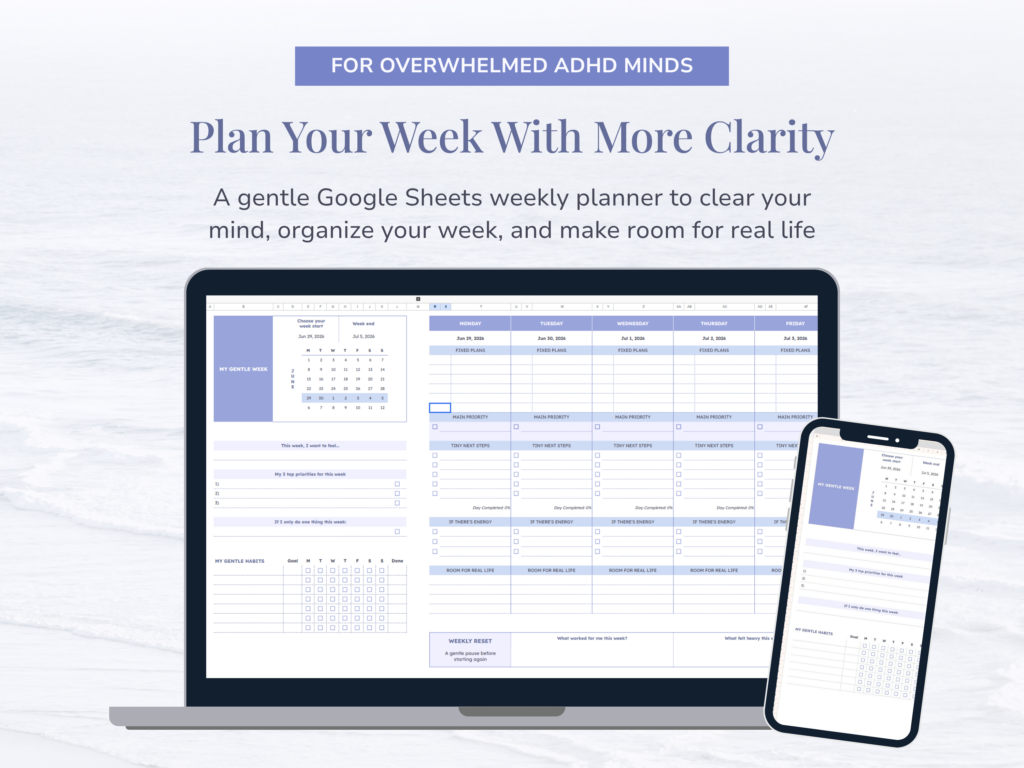
This idea is exactly why I created my ADHD Weekly Planner for Google Sheets. Instead of trying to build a complicated productivity dashboard, I wanted something simple. A calm space where you can:
- clear your mind
- choose realistic priorities
- break tasks into manageable next steps
- keep track of important appointments
- build a week that leaves room for real life
Because planning shouldn’t feel like another job. It should help you feel calmer, clearer, and more in control of your week.
Final Thoughts
If weekly planning has never worked for you, it doesn’t necessarily mean you’re bad at planning. It may simply mean you’ve been using systems that expect too much.
ADHD brains don’t need more complexity. They need more clarity. This week, try planning less. Choose fewer priorities. Leave more space. Focus on progress instead of perfection. You might be surprised by how much easier your week feels.