

How to Calm a Racing Mind in Just 5 Minutes a Day
30 January 2026
Your mind feels busy before the day has even started. Thoughts pile up, jump ahead, loop back, and refuse to slow down. Even when nothing urgent is happening, your brain stays “on,” scanning, planning, replaying, worrying.
You try to rest — but your mind won’t cooperate. And the more you tell yourself to calm down, the more restless you feel.
If your mind races like this, it’s not because you’re doing something wrong. It’s because your mental load has nowhere to go.
Why a racing mind feels so hard to calm
A racing mind isn’t a lack of calm. It’s a sign of mental overload.
When you’re overwhelmed, emotionally stretched, or navigating ADHD, your brain works overtime to keep track of everything at once. Thoughts, emotions, unfinished tasks, worries, and decisions all stay active — because your mind doesn’t trust that it can let them go.
So it keeps running.
This constant mental activity isn’t a failure of focus or discipline. It’s your brain trying to protect you by holding on tightly. The problem isn’t that your mind is too loud — it’s that it hasn’t been given a clear moment to pause.
Why common advice doesn’t calm a racing mind
Most tips for calming your mind sound reasonable, but often miss the reality of overwhelm.
Being told to “clear your mind,” “relax,” or “meditate for 20 minutes” can feel impossible when your head is already full. Long practices demand energy you don’t have. Forced positivity can create guilt. And trying to stop thoughts altogether usually makes you more aware of how busy your mind feels.
These approaches fail because they ask for more effort when what you really need is less pressure. A racing mind doesn’t calm down by being controlled. It calms down when it feels safe enough to slow.

A gentle way to calm your mind in five minutes
Calming a racing mind doesn’t require silence, perfection, or long routines. Often, it starts with short, intentional pauses that help your thoughts settle instead of stack. Here’s what actually helps:
1. Lower the time requirement.
Your mind doesn’t need a long reset. Five minutes is often enough to signal that it doesn’t need to hold everything right now.
2. Give thoughts a place to land.
Instead of trying to stop your thoughts, let them rest somewhere. When thoughts are acknowledged — even briefly — they tend to soften.
3. Focus on what feels steady, not forced positivity.
On hard days, calm comes from noticing small supports or neutral moments, not from pretending everything is fine.
These small shifts reduce mental pressure. And when pressure drops, calm becomes possible — naturally, not forcefully.
If you want support calming your mind daily
If creating these short pauses feels helpful but hard to sustain on your own, a gentle structure can make it easier.
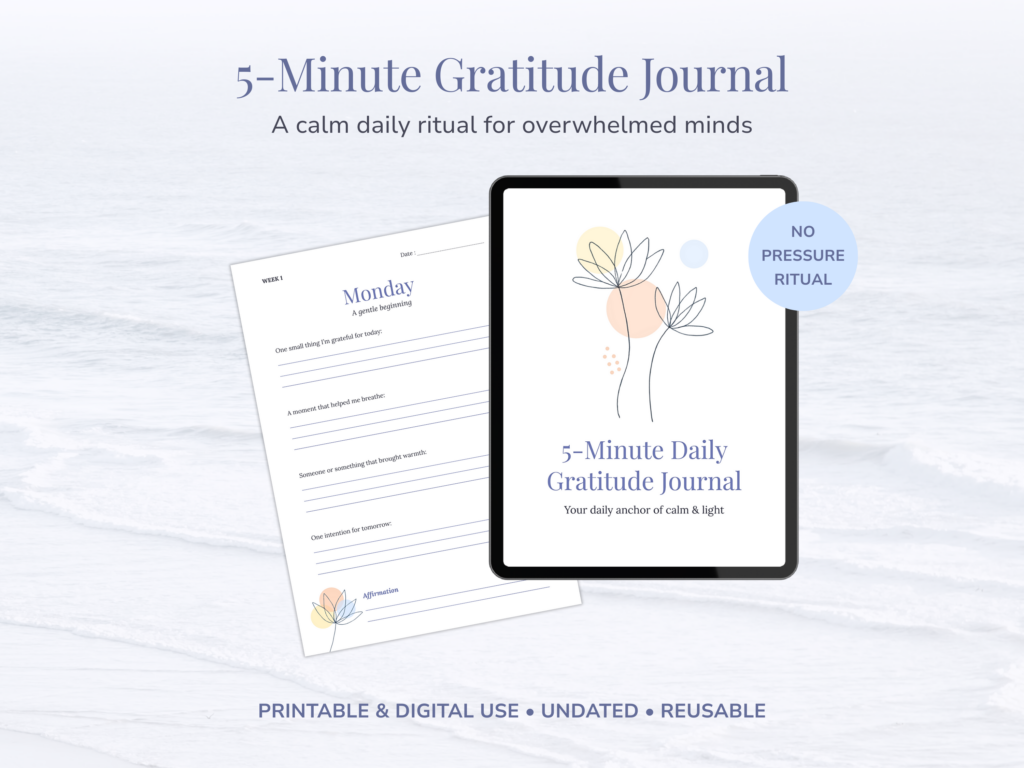
The 5-Minute Daily Gratitude Journal is designed for overwhelmed minds that need calm without effort. It offers short, grounding prompts you can complete in just a few minutes, helping you unload mental noise and notice small points of steadiness — even on difficult days.
There’s no pressure to be consistent and no expectation to feel positive. You can use it when your energy is low, when your mind is racing, or whenever you remember. It’s simply a quiet space to slow down and practice calm, one small moment at a time.
If you want a supportive way to make these pauses part of your day, this journal can gently guide you — at your own pace.
A soft closing thought
You don’t need to fully calm your mind for it to ease. Small pauses matter. Imperfect practices matter. And five minutes is often more than enough.
A racing mind isn’t a problem to fix — it’s a signal asking for space. And space, even briefly, can change everything