

Why Big Goals Feel Impossible With ADHD (And What Works Instead)
18 March 2026
Setting goals should feel motivating. But for many people with ADHD, it often turns into the opposite: overwhelm, avoidance, and frustration.
You start with a big idea — something meaningful you genuinely want to achieve. At first, the motivation is powerful. You feel ready to change things, ready to work hard, ready to move forward.
But a few days later, something shifts. The excitement fades… and suddenly the goal feels huge, heavy, and impossible to approach.
If this pattern sounds familiar, there is a reason for it — and it has very little to do with laziness or lack of discipline.
The ADHD Motivation Cycle (Why It Starts Strong and Then Stops)
When someone with ADHD sets a big goal, the beginning often feels exciting. There is energy, enthusiasm, and the sense that anything is possible.
For a short time, the brain is fueled by novelty and motivation, which ADHD brains respond to very strongly. But once the initial excitement fades, the brain starts seeing the goal differently.
Instead of seeing the inspiring outcome, it begins to see:
- the amount of work required
- the complexity of the process
- the long road ahead
What once felt exciting now feels like a mountain standing in the way. And when the brain perceives something as too big or too complex, it often reacts in a very predictable way: it freezes.
Not because you don’t care — but because the task suddenly feels too overwhelming to start.
Why Traditional Goal-Setting Advice Often Fails With ADHD
Most traditional productivity advice focuses on long-term structure. You are told to:
- plan everything in advance
- create a strict roadmap
- define long-term milestones
- follow a structured routine
On paper, this sounds logical. But for many ADHD minds, this approach quickly becomes oppressive rather than helpful.
Why? Because ADHD energy and focus are not stable or predictable. Some days you may have strong momentum. Other days, your mental energy is much lower.
When a plan is too rigid, even a small delay can make the entire system feel broken. And once you feel “behind schedule,” it becomes easy to think: “I’ve already failed. What’s the point of continuing?”
At that moment, many people abandon the goal completely — even if they cared deeply about it.

The Real Problem: The Goal Feels Too Big to Start
The real obstacle is rarely the goal itself. The obstacle is the distance between where you are now and where the goal lives.
If the gap feels too large, the brain struggles to identify the first step. And when the first step isn’t clear, action becomes incredibly difficult.
This is why so many ADHD goals fail before real progress even begins.
What Works Better for ADHD: Tiny, Visible Steps
Instead of focusing on the final outcome, ADHD brains respond much better to small, visible progress.
This means shifting your focus from: “How do I achieve this big goal?” to something much simpler: “What is the smallest step I can take today?”.
Tiny steps work better because they:
- reduce overwhelm
- create quick progress
- build momentum naturally
- make starting easier
When the brain sees progress happening, motivation begins to return. Momentum replaces pressure. Instead of facing a mountain, you are simply taking one small step forward.
And that step is what keeps the goal alive.

Progress Is Not About Speed — It’s About Continuity
One of the most powerful shifts for ADHD goal setting is this: Success does not come from doing everything perfectly. It comes from continuing to move forward, even slowly.
A tiny action repeated over time will always move you further than a huge burst of motivation followed by burnout.
Consistency beats intensity. And small steps protect your energy instead of exhausting it.
A Tool Designed for This Approach
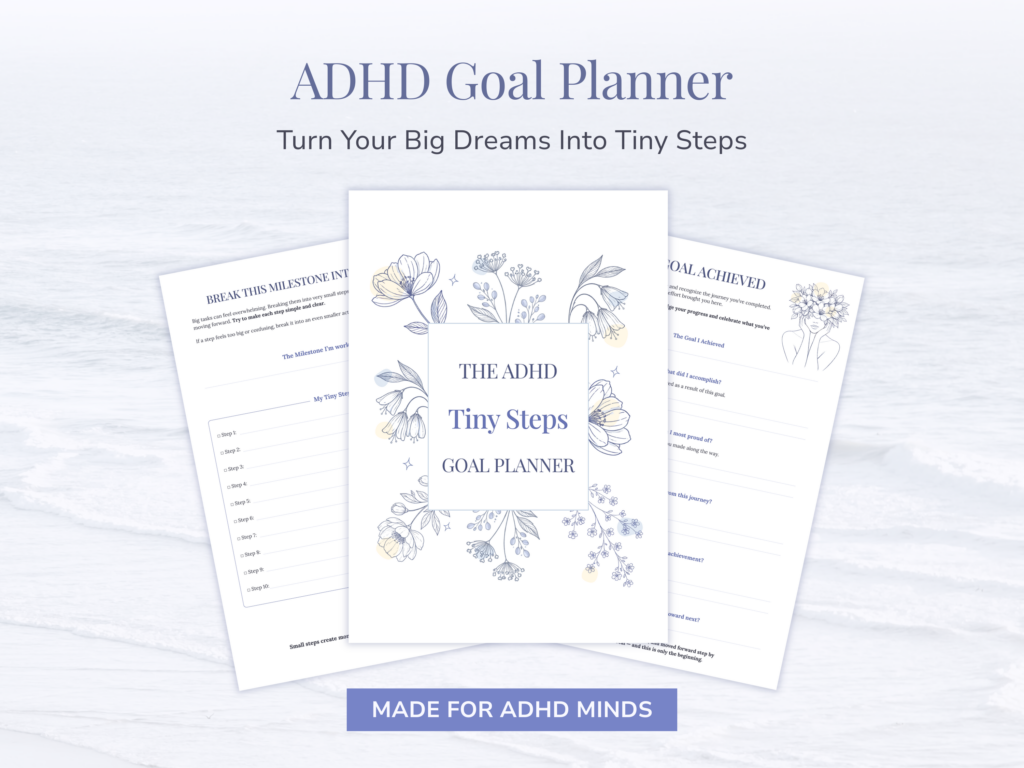
If you struggle with big goals because they feel overwhelming or impossible to start, the ADHD Goal Planner – Tiny Steps System was designed exactly for this challenge.
Instead of forcing rigid planning, this printable planner helps you:
- turn a big goal into clear milestones
- identify tiny, manageable actions
- focus on visible progress instead of pressure
Each page gently guides you from defining your goal to taking small steps that feel realistic and achievable.
The goal is not to push yourself harder. It’s to create a system that helps you keep moving forward without overwhelm.
The Power of Tiny Steps
If big goals have always felt impossible for you, it doesn’t mean you lack discipline or motivation. It may simply mean that the system you were using didn’t match how your brain works.
ADHD progress often looks different. It’s slower. It’s flexible. It’s built on small actions rather than giant leaps.
But over time, those small steps create something powerful: real, sustainable progress.