Why Trying to “Calm Down” Makes Stress Worse — And What Helps Instead
13 April 2026
You’ve probably told yourself this before: “Calm down.”; “It’s not a big deal.”; “Just relax.” And somehow… it makes everything worse.
Your mind keeps racing. Your body stays tense. And on top of that, you start feeling frustrated — or even guilty — for not being able to calm down.
If this sounds familiar, there’s nothing wrong with you. The problem isn’t that you can’t calm down. It’s that you’re trying to do it in a way that works against how your mind actually processes stress.
Why “Calming Down” Doesn’t Work When You’re Already Overwhelmed
When stress hits, your system is already overloaded. Your thoughts are loud. Your emotions feel tangled. Your body is holding tension without you even noticing it.
In that state, telling yourself to calm down is like trying to silence noise by shouting over it. It creates pressure.
Instead of helping, it sends a message like:
➡️ “You shouldn’t feel this way.”
➡️ “You need to fix this now.”
And that pressure keeps your system activated. Not calmer.
The Real Problem: You’re Trying to Skip a Step
Most advice jumps straight to the end:
- breathe
- relax
- think positive
But when your mind is full, you can’t skip straight to calm. You need to create space first.
Because calm doesn’t come from forcing your thoughts to stop. It comes from letting them move through instead of staying stuck inside.

What Actually Helps (Instead of Forcing Calm)
Here’s what works better — especially on overwhelming or low-energy days.
1. Let Everything Out (Without Organizing It Yet)
Before you try to feel better, you need to empty what’s inside. Not neatly. Not logically. Just honestly.
Thoughts, worries, random sentences — let them come out as they are.
This isn’t about solving anything. It’s about reducing the pressure inside your head.
2. Separate What You Feel From What’s Actually Happening
When everything is mixed together, stress feels bigger than it is. A small shift can help:
- What are the facts?
- What are the feelings around them?
You don’t need to change anything yet. Just seeing the difference can already create breathing space.
3. Identify What You Can (and Can’t) Control
One of the biggest sources of stress is trying to carry things that aren’t yours to fix. Ask yourself:
- What is actually in my control right now?
- What isn’t?
You don’t need to solve everything. Sometimes, stress softens just by putting things back in the right place.
4. Come Back to Your Body (Gently, Not Perfectly)
You don’t need a full routine. Just a small shift:
- a slower breath
- relaxing your shoulders
- unclenching your jaw
Tiny signals that tell your body: you’re safe enough right now.
5. Choose One Small Next Step (If You Have the Energy)
Not ten things. Not a full plan. Just one small, doable action.
Even something as simple as:
- sending one message
- opening one document
- standing up and moving for a minute
Progress reduces stress more than pressure ever will.

A Simpler Way to Handle Stress (Without Fighting Yourself)
You don’t need to force yourself to calm down. You don’t need to fix everything in one moment.
You just need:
- a place to let things out
- a way to bring clarity
- and a gentle path back to yourself
That’s what actually creates calm. Not pressure. Not control. Not perfection.
If You Need a Little More Support
On some days, even knowing what helps isn’t enough. When your mind feels too full or your body won’t settle, it can help to have something that guides you step by step without asking too much from you.
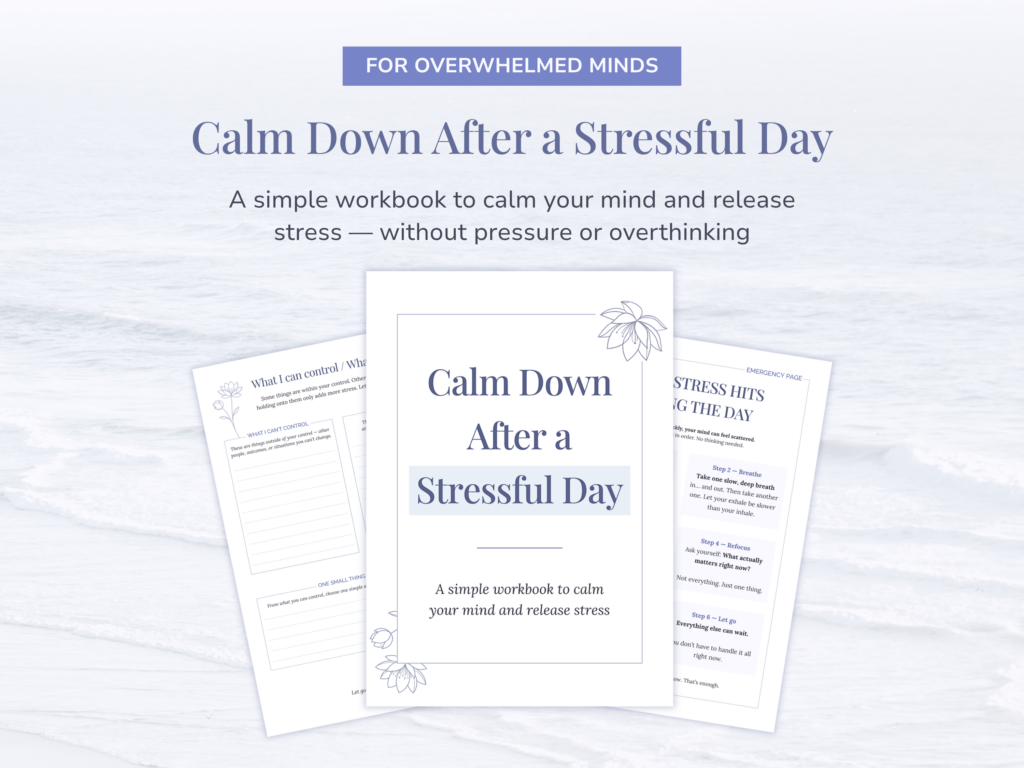
The Stress Relief Workbook was designed for those exact moments.
It gives you a simple, structured space to:
- release what’s on your mind
- separate thoughts and emotions
- let go of what you can’t control
- and come back to small, manageable actions
You don’t have to do everything. You just need a place to pause and breathe again.
If calming down feels hard, it’s not because you’re doing something wrong. It’s because calm isn’t something you can force. It’s something that appears when the pressure starts to release.
And that begins with one simple shift. Stop trying to silence your stress. Start giving it somewhere to go.