

How to Clear Mental Overload with ADHD Before You Try to Plan Anything
30 January 2026
You sit down to plan your day — or your week — with good intentions. But within minutes, your head feels even fuller. Tasks blur together. Priorities feel impossible to choose. Your thoughts jump from one thing to another, and instead of clarity, you feel stuck.
If planning feels harder before it feels helpful, you’re likely dealing with mental overload ADHD, not a lack of organization skills.
And no planner can work while your mind is still carrying everything at once.
Why mental overload with ADHD feels so hard
Mental overload ADHD isn’t just having a lot to do. It’s having too many thoughts active at the same time, with no clear place for them to land.
ADHD brains are great at making connections — but when you’re overwhelmed, those connections turn into mental noise. Tasks, worries, reminders, emotions, and unfinished ideas all compete for attention. Your brain tries to hold onto everything so nothing gets forgotten.
The result? Racing thoughts, decision fatigue, and the feeling that planning is impossible. This isn’t because you’re bad at planning. It’s because planning requires mental space, and overload leaves none.
Why planning too soon doesn’t help ADHD overwhelm
When mental overload hits, the instinct is often to plan harder. More lists. More structure. More effort.
But traditional planning assumes you already have clarity. It asks you to prioritize, estimate time, and make decisions — all things that are especially difficult when your mind feels crowded.
This is why trying to plan while overwhelmed often leads to frustration or shutdown. You’re being asked to organize thoughts that haven’t been unloaded yet.
Planning doesn’t fail because you didn’t try hard enough. It fails because it came too early in the process.

A gentler way to clear mental overload before planning
For ADHD brains, clarity doesn’t come from organizing first. It comes from emptying before structuring. Here’s a gentler, more realistic approach:
1. Clear mental clutter before making decisions.
Instead of asking “What should I do?”, start with “What’s in my head right now?” Getting thoughts out reduces pressure immediately.
2. Separate what matters now from what can wait.
Not everything needs attention today. Creating distance between urgent, later, and unnecessary thoughts helps your brain breathe.
3. Match plans to your energy, not your intentions.
Mental overload increases when plans ignore how much capacity you actually have. Planning works better when it starts with honesty, not optimism.
Once your mind is lighter, planning becomes simpler — not because you’re more disciplined, but because you finally have space to think.
If you want support applying this
If clearing mental overload ADHD feels difficult to do on your own, having a gentle structure can help.
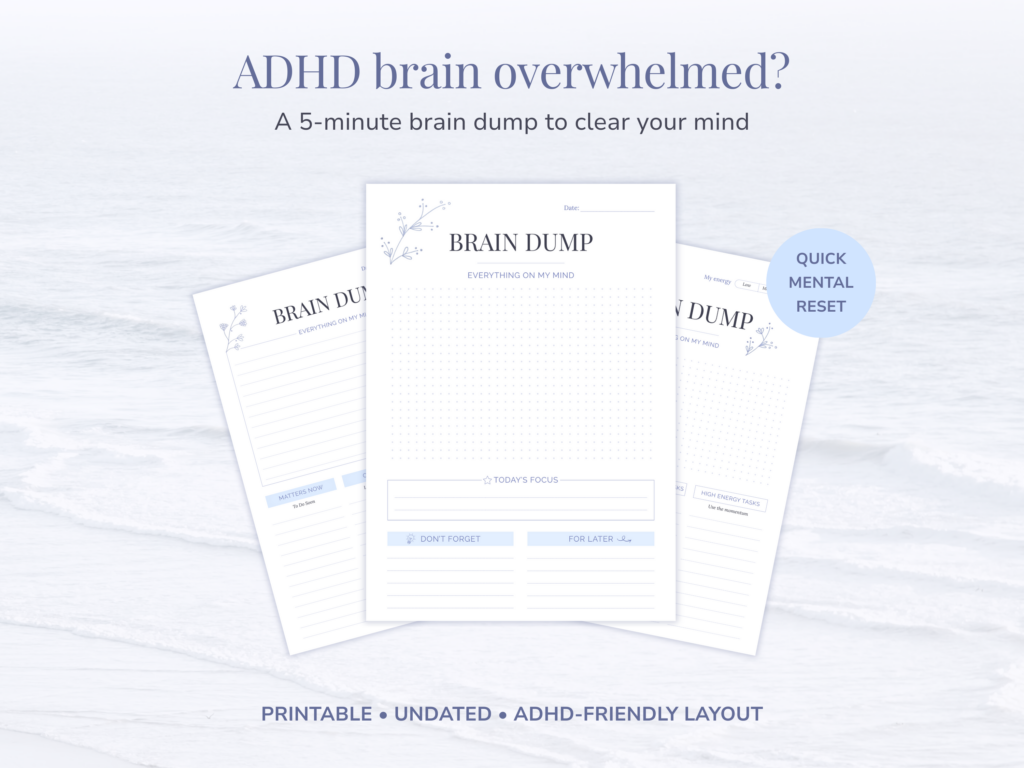
The ADHD Brain Dump is designed specifically for overwhelmed minds that need relief before planning. It gives your thoughts a place to land without pressure or long sessions, guiding you to sort what matters now, what can wait, and what can be let go of — while taking your current energy into account.
There’s no right way to use it and no expectation to plan perfectly afterward. It’s simply a supportive page to help you clear mental clutter so decisions feel possible again.
If you want a calm starting point before planning, this tool can quietly support you.
A grounding reminder
You don’t need to plan better to feel clearer. You need space first. Clearing mental overload — even imperfectly — is already a step forward. And once your mind feels lighter, planning has a chance to work