
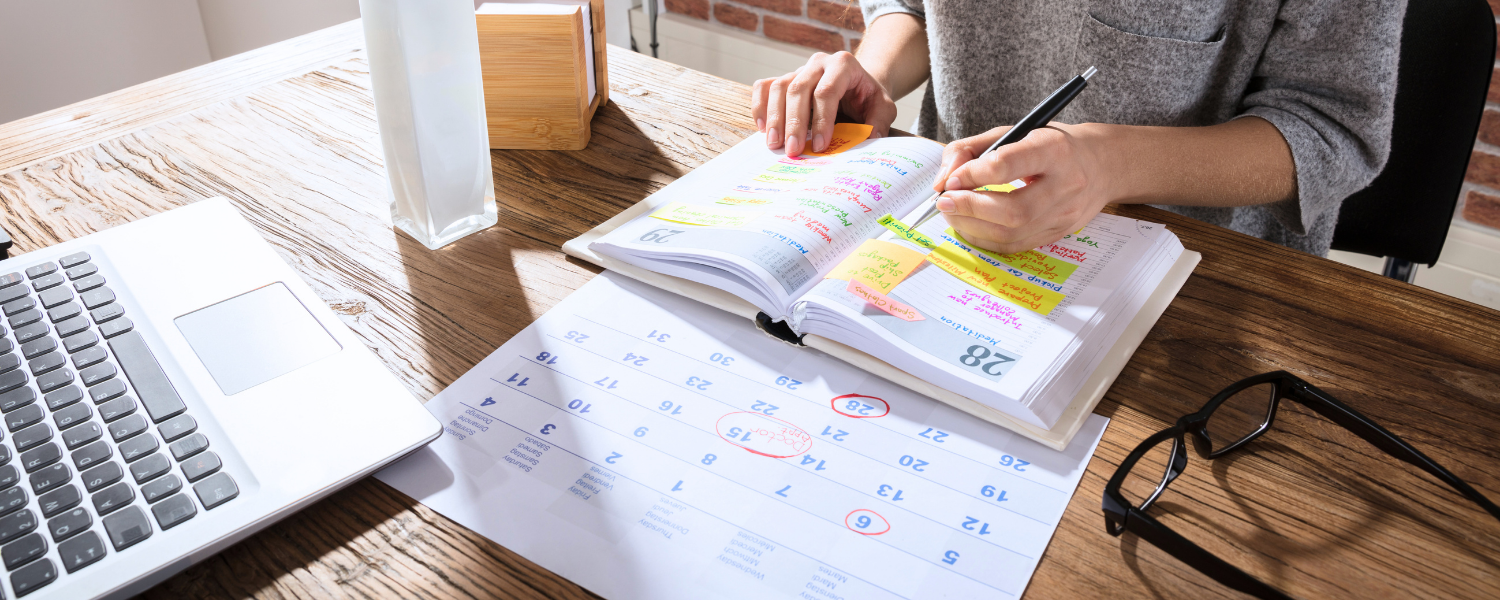
Paper vs Digital Planning: Which One Works Better for ADHD and Overwhelmed Minds?
1 June 2026
Have you ever bought a planner, used it for three days, and then completely forgotten it existed? Or maybe you’ve downloaded a productivity app that looked perfect… only to abandon it a week later.
If that sounds familiar, you’re not alone. Many overwhelmed people spend years searching for the “perfect” planning system. They jump from paper planners to digital tools, from notebooks to apps, hoping the next system will finally make everything click.
But what if the problem isn’t you? What if the problem is that you’ve been trying to force yourself into a planning style that doesn’t actually fit your brain?
Let’s talk about paper planning, digital planning, and how to find the option that works best for you.
The Truth About Planning Systems
Most productivity advice assumes that everyone works the same way. Pick a planner. Create a routine. Stick with it. Problem solved. But real life doesn’t work like that.
- Some people think better when they write things down by hand.
- Others need the flexibility of digital tools.
- Some switch between both depending on the season of life they’re in.
And for overwhelmed minds, ADHD brains, or anyone dealing with mental overload, the best planning system is often the one that creates the least friction. Not the one that looks the prettiest on Instagram.
Why Paper Planning Works So Well for Many People
There is something powerful about putting pen to paper. Writing by hand naturally slows your brain down.
Instead of jumping between tabs, notifications, and distractions, you’re focusing on one page and one thought at a time. Paper planning can help you:
- reduce mental noise
- feel more grounded
- process thoughts more clearly
- disconnect from screens
- make plans feel more tangible
Many people also find that physically crossing something off a list feels more satisfying than tapping a checkbox on a screen.
Paper can be especially helpful when your brain feels overstimulated or emotionally overwhelmed. Sometimes you don’t need another app. You need a blank page and a few quiet minutes.

Why Digital Planning Works Better for Other People
Of course, paper isn’t perfect. Paper planners can get lost. You might forget to bring them with you. You can’t easily move tasks around. And if you’re someone who constantly changes plans, paper can sometimes feel frustrating.
That’s where digital planning shines. Digital tools are:
- easy to edit
- accessible from multiple devices
- searchable
- flexible
- impossible to “mess up”
Many people love being able to erase, move, duplicate, or reorganize information without rewriting everything. And if you’re already spending a lot of time on your phone, tablet, or computer, digital planning may feel more natural. For some overwhelmed minds, reducing physical clutter can also make a huge difference.
The Best of Both Worlds: Fillable PDFs
One of the biggest misconceptions is that you have to choose between paper and digital planning. You don’t. Fillable PDFs offer a middle ground.
You can print them when you want the experience of writing by hand. Or you can complete them directly on your computer, tablet, or phone. The structure stays the same. The format adapts to your needs.
This flexibility is especially useful when your energy, schedule, or attention changes from week to week.
Some days you’ll want paper. Some days you’ll want digital. And that’s okay.
Why Google Sheets Works Surprisingly Well for ADHD Brains
When most people think about planners, Google Sheets probably isn’t the first thing that comes to mind. But for many ADHD and overwhelmed minds, it can be one of the simplest planning tools available.
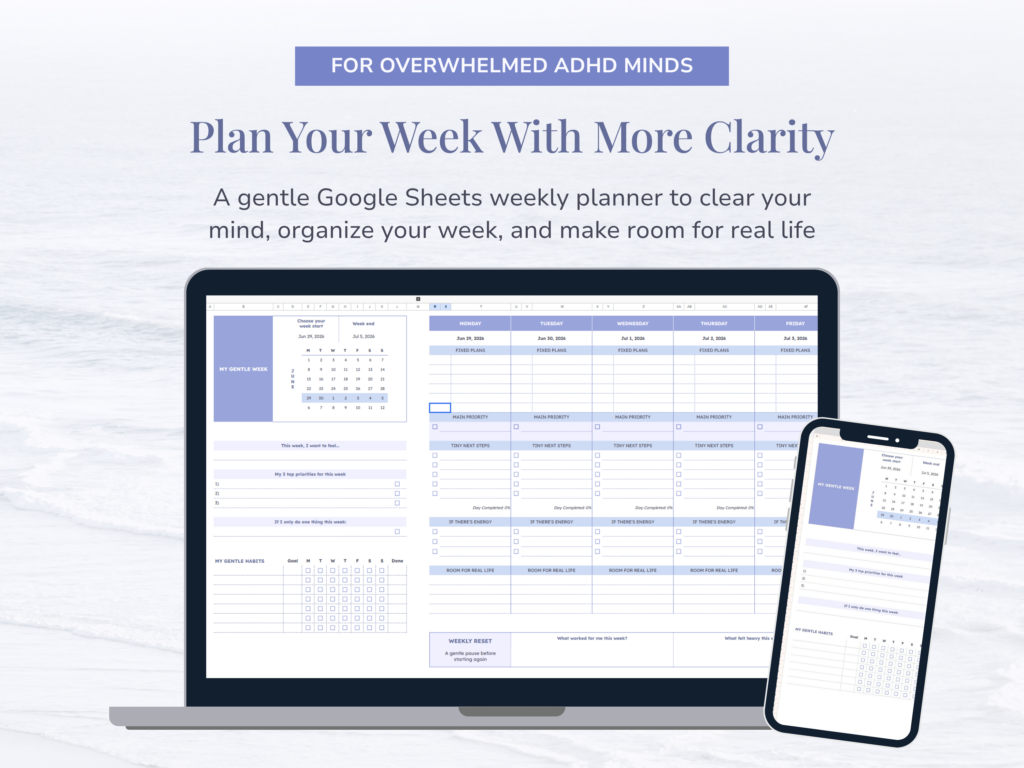
Why? Because it removes a lot of the friction. You don’t need to rewrite pages every week. You can duplicate a template in seconds. You can move tasks around easily. You can access it from almost anywhere. You can customize it to fit your brain instead of adapting your brain to fit the planner.
Google Sheets isn’t necessarily prettier than a traditional planner. But it can be easier to maintain. And when it comes to organization, easy often beats perfect.

The Real Question Isn’t Paper or Digital
When people ask whether paper or digital planning is better, they’re often asking the wrong question. The better question is: Which option makes it easiest for me to come back after I fall off track?
Because eventually, life will get busy. You’ll forget. You’ll lose momentum. You’ll skip a few days. That’s normal.
The goal isn’t finding a planning system you’ll use perfectly forever. The goal is finding one that feels easy to restart. A good system welcomes you back. A bad system makes you feel guilty for leaving.
Which Planning Style Fits You Best?
There is no universal answer. But here’s a simple starting point.
Choose Paper Planning If…
- you feel overwhelmed by screens
- writing helps you think
- you enjoy slowing down
- you like physically crossing things off
- you want a calmer planning experience
Choose Digital Planning If…
- you need flexibility
- you change plans often
- you want access across devices
- you dislike rewriting information
- you prefer editing instead of starting over
Choose Google Sheets If…
- you want a simple system
- you need flexibility without complexity
- you like moving tasks around easily
- you want reusable weekly or monthly planning pages
- you prefer practical organization over decorative planning
Tools for Every Planning Style
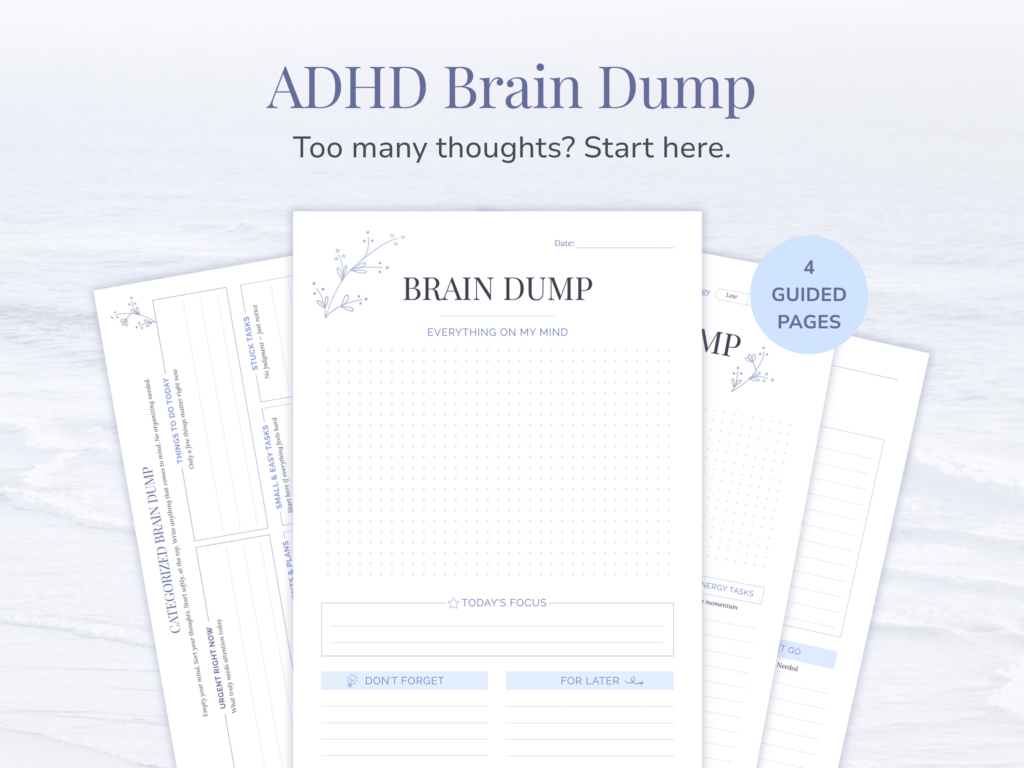
If your brain feels overloaded and you need a place to unload your thoughts, try the ADHD Brain Dump.
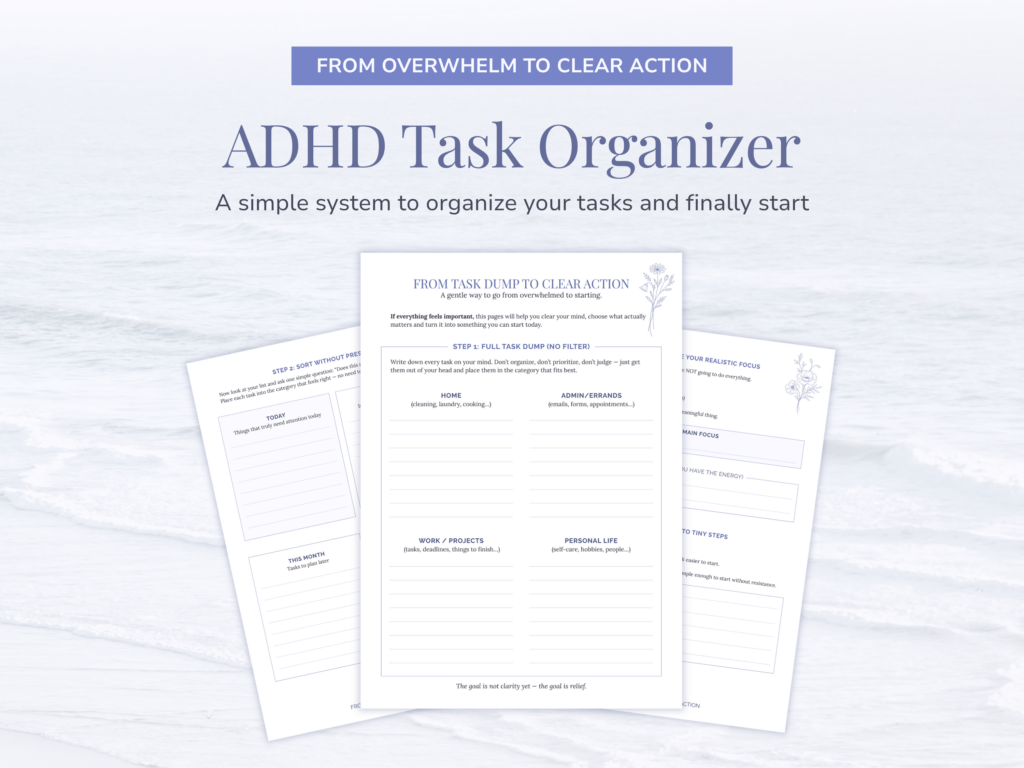
If you’re struggling to decide what deserves your attention first, the ADHD Task Organizer can help you sort through the chaos and focus on what matters.
If starting feels impossible, the ADHD Task Starter helps break overwhelming tasks into manageable first steps.
If your week feels messy and out of control, the ADHD Weekly Reset System can help you regroup and create a realistic plan.
And if you’re looking for a flexible planning system that adapts to your life, an ADHD-friendly Google Sheets Planner may be exactly what you’ve been missing.
Because the best planning system isn’t the one everyone else loves. It’s the one you’ll actually use.