How to Start Running Slowly When You Feel Out of Shape
13 May 2026
Starting to run when you feel out of shape can feel incredibly intimidating. You imagine everyone else running faster, looking stronger, breathing easily while you struggle after two minutes. You tell yourself you are “too late,” “too unfit,” or simply “not made for running.”
I know that feeling very well. When I started running, I genuinely believed it would always feel hard. I thought I would always be the person struggling through every session, counting the seconds until it was over and wondering how other people made it look so natural.
But here is what I wish someone had told me earlier: running does not become enjoyable because you suddenly become super athletic overnight. It becomes enjoyable because your body adapts little by little — and because you stop trying to prove something every time you run.
Stop Trying to Run “Well”
One of the biggest mistakes beginners make is trying to run too hard, too fast. You do not need to suffer through every session to become a runner. In fact, going slower is often what allows you to keep going long enough to improve.
At the beginning, your goal is not performance. Your goal is consistency. That means:
- running slowly enough that you can recover,
- accepting walk breaks,
- shortening sessions when needed,
- and focusing more on showing up than on impressing yourself.
Because the truth is: your body gets stronger through repetition, not punishment.
The Hardest Part Is Often Starting
For me, one of the hardest things was not even the running itself. It was convincing myself to go. Especially on days when it was cold, raining, windy, or when my energy was low. I constantly negotiated with myself before every session.
And honestly? That is normal. Motivation is unreliable at first because your brain still associates running with discomfort.
But something interesting happens when you keep going gently and consistently: your brain slowly starts connecting running with pride, progress, mental clarity, and feeling better afterward.
At some point, I stopped forcing myself to run. I actually started wanting to go. And that changes everything.
A Small Goal Can Change Your Mindset
One thing that helped me enormously was signing up for a race. Not because I wanted to perform. But because suddenly, running became real.
I had a concrete reason to train. A direction. A purpose outside of “trying to get in shape.” It gave me enough structure to keep showing up even when motivation disappeared.
And surprisingly, that is when running became softer. I stopped trying to “win” every session. I focused on building endurance slowly and training regularly instead.
That is where real progress started happening.
You Do Not Need to Become a Different Person First
A lot of people think:
- “I will start running once I lose weight.”
- “Once I feel fitter.”
- “Once I feel more confident.”
But confidence often comes after you begin. Not before. You build it by proving to yourself, over and over again, that you can keep showing up — even imperfectly.
One slow run. One short session. One tiny step at a time. That is how people become runners.

Start Smaller Than You Think
If you feel completely out of shape right now, try removing the pressure entirely. Your first goal could simply be:
- putting your shoes on,
- going outside,
- alternating walking and jogging,
- moving for 15 or 20 minutes,
- and coming back home feeling proud instead of defeated.
That counts. Actually, that matters much more than destroying yourself during one “perfect” workout and quitting afterward. Gentle consistency changes more than intense motivation ever will.
A Gentle Running Plan for Beginners
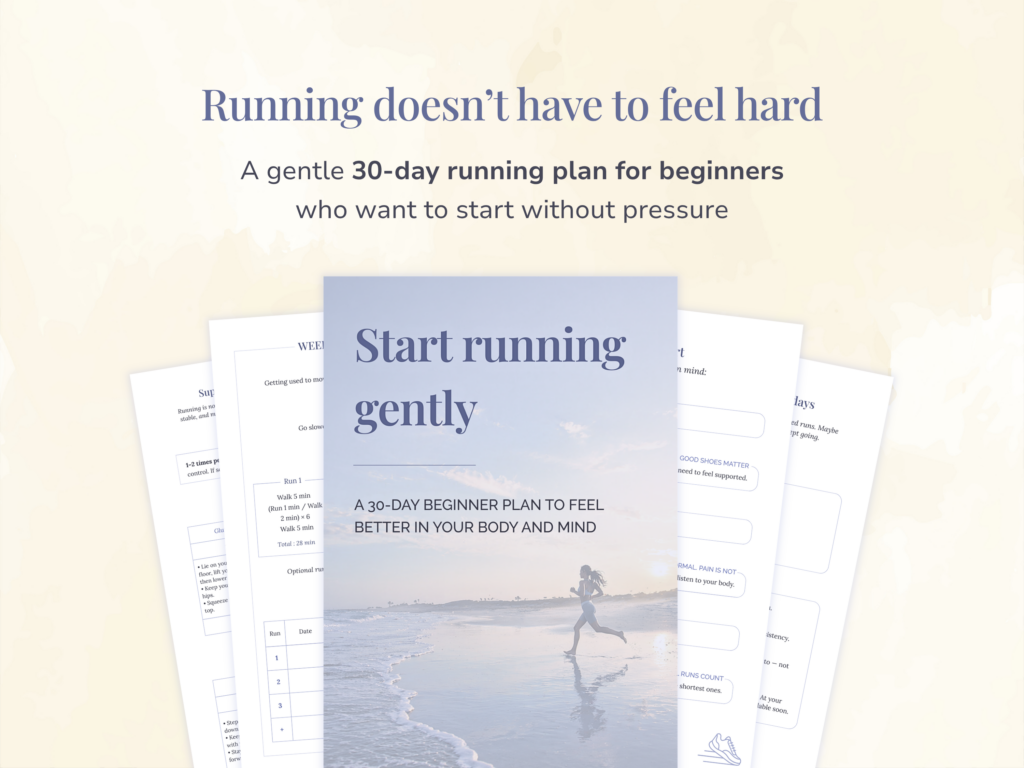
If you want support getting started without pressure, I created the Gentle Beginner Running Plan — a soft 30-day printable running plan designed for complete beginners, overwhelmed minds, and people who want to rebuild confidence slowly.
It includes:
- gentle run/walk sessions,
- mindset prompts and reflections,
- progress tracking,
- supportive routines,
- simple strength exercises,
- and a realistic approach focused on consistency instead of performance.
The goal is not to become perfect. The goal is to help you trust yourself again, one small run at a time.
You do not need to be fit before you start running. You just need to begin where you are — slowly, gently, and one step at a time.
Because progress does not come from pushing yourself to exhaustion. It comes from showing up consistently, even imperfectly.
And little by little, what once felt impossible can start feeling possible for you too.