
Why “All or Nothing” Fitness Mindsets Make Beginners Want to Quit
20 May 2026
For a long time, I thought getting “serious” about fitness meant changing my entire life overnight. New routine. New diet. New body. New habits. New me.
I would build intense plans for myself with:
- 5 or 6 workouts per week,
- strict food rules,
- unrealistic expectations,
- and huge transformation goals.
And every single time, I failed. Not because I was lazy. Not because I lacked motivation. Because I was trying to go from 0 to 100 immediately.
The “All or Nothing” Trap
A lot of beginners unknowingly approach fitness with an all-or-nothing mindset. They believe:
- if they can’t do everything perfectly, there’s no point,
- if they miss one workout, they’ve ruined everything,
- if they eat one “bad” meal, they failed,
- if results aren’t fast enough, they should quit.
And honestly? Social media makes this mentality even worse. Everything online feels EXTREME. Dramatic transformations. Impossible routines. “Discipline” culture. Punishment disguised as motivation.
So beginners end up believing that progress must feel intense to count. But most of the time, intensity is exactly what makes people give up.

Why This Mindset Fails So Many People
The problem with all-or-nothing fitness is that it creates a system you can only maintain when:
- you’re highly motivated
- mentally stable
- full of energy
- and able to perform perfectly.
Real life doesn’t work like that. Eventually:
- you get tired
- stressed
- overwhelmed
- sick
- emotional
- busy
- or simply human.
And when the routine becomes impossible to maintain, many people abandon everything completely.
That’s exactly what used to happen to me. If I slipped up with food, I would stop exercising too. If I missed workouts, I felt like a failure. And after a while, I genuinely started believing I simply “wasn’t the kind of person” who could stay consistent.
The Shift That Changed Everything for Me
What changed my relationship with fitness completely was surprisingly simple: I stopped exercising to punish my body. And I stopped exercising mainly to lose weight.
Instead, I started moving because I wanted to feel better mentally. That changed everything. Running stopped being:
- a race against my body
- a desperate attempt to change myself
- or a short-term transformation project.
It became:
- stress relief
- emotional release
- confidence
- energy
- progress
- and proof that I could trust myself again.
Ironically, that’s also when I became more consistent than ever before.

You Do Not Need to Go Hard to Make Progress
One of the biggest lies in fitness culture is that gentle progress “doesn’t count.” But consistency matters far more than intensity.
Two enjoyable workouts per week that you can sustain for months will always change your life more than:
- two extreme weeks
- followed by three months of exhaustion and guilt.
Beginners especially do not need punishment. They need:
- realistic expectations
- small wins
- achievable routines
- and permission to start slowly.
A Softer Approach to Starting Running
When I started changing my approach to fitness, I realized I needed something very different from the aggressive plans I used to force on myself. I didn’t need a bootcamp mentality. I needed something that made me actually want to continue.
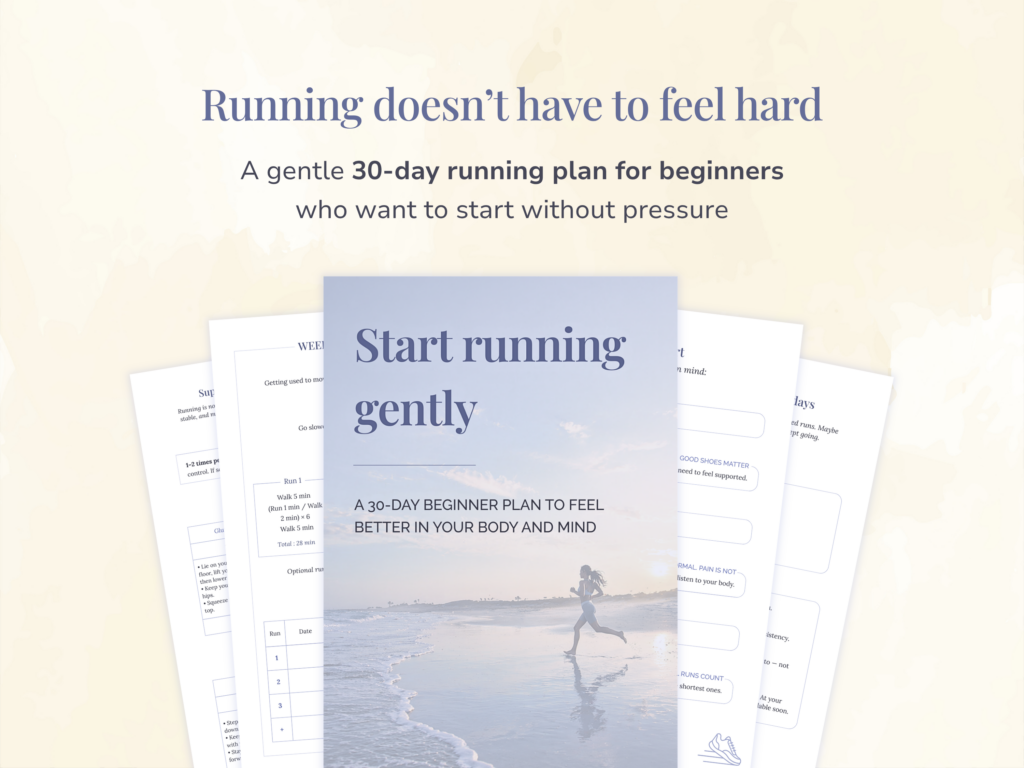
That’s what slowly inspired the Gentle Beginner Running Plan. Not a “summer body” challenge. Not a punishment plan. Not a transformation countdown.
Just a calmer, more realistic way to rebuild consistency, confidence, and trust in yourself through movement.
The plan combines gentle run/walk sessions, mindset support, reflections, progress tracking, and small achievable steps designed for real beginners — especially those who feel overwhelmed by traditional fitness culture.
Because movement should help you feel more connected to yourself. Not constantly at war with yourself.
You do not need to become a completely different person overnight to start exercising. You do not need perfect discipline. You do not need extreme motivation. And you definitely do not need to hate yourself into consistency.
Start smaller. Start softer. Start slower. The goal is not to survive an intense routine for two weeks. The goal is to build a relationship with movement that still exists six months from now.