

How to Prioritize with ADHD When Everything Feels Important
30 January 2026
Most productivity advice sounds the same: do more, plan better, stay focused. So when things don’t move forward, it’s easy to assume the problem is motivation or discipline. But for many ADHD and overwhelmed minds, the real issue isn’t a lack of effort. It’s having too many priorities at the same time.
When everything feels important, learning how to prioritize with ADHD can feel almost impossible. Your brain is not just looking at a task list. It is trying to decide what matters, what can wait, what feels urgent, and what might go wrong if you choose the “wrong” thing.
And that constant decision-making can become exhausting before you even start.
In this article
Why prioritizing with ADHD feels so hard
ADHD brains don’t struggle because they care too little. Very often, they struggle because they care about too many things at once. When you’re faced with multiple priorities, your brain has to constantly decide:
- What comes first?
- What can wait?
- What happens if I choose wrong?
This creates decision fatigue. And decision fatigue can drain energy faster than the task itself.
Instead of moving into action, your mind keeps trying to hold everything at once: work, home, messages, appointments, unfinished tasks, future goals, and all the things you “should” be doing. That’s why ADHD prioritizing can feel overwhelming rather than helpful. You’re thinking about everything, but acting on very little.
If this feels familiar, you might also like this post on why everything feels important. It explains why your brain can struggle to separate urgent, important, and emotionally loud tasks.
The ADHD prioritizing shift that makes action easier
The key shift isn’t learning how to manage more. It’s learning how to intentionally choose less. Fewer priorities don’t mean lower standards. They don’t mean giving up. They mean creating a smaller, clearer focus so your brain doesn’t have to make endless decisions all day long.
Choosing fewer priorities helps you:
- reduce decision fatigue
- protect your energy
- lower mental pressure
- create more room to start
- make progress feel possible again
When you choose one to three priorities instead of ten, your brain has less to negotiate with. There’s less pressure to keep everything in mind, and more space to actually take action.
For ADHD minds, focus improves not through effort, but through simplification.

How to prioritize with ADHD without overloading yourself
Choosing fewer priorities can feel uncomfortable at first — especially if you’re used to measuring progress by how much you intend to do. But a realistic priority is not the thing that sounds best on paper. t’s the thing you can actually engage with in your real life, with your real energy, this week.
Here’s a gentler way to prioritize tasks with ADHD:
1) Start by unloading everything
Before choosing priorities, get everything out of your head. Write down the tasks, reminders, worries, ideas, appointments, and unfinished things taking up space in your mind.
Seeing the full picture makes it easier to stop carrying everything mentally. This step matters because you can’t choose clearly when everything is still floating around in your head.
If your thoughts feel scattered, you can start with this guide on how to brain dump when your mind feels overwhelmed.
2) Choose what truly matters this week.
Not what matters eventually. Not what you “should” be able to do. Not everything that feels urgent. Just ask yourself: What deserves my energy this week?
Try choosing one to three priorities maximum. That might feel small, but it gives your brain a clearer direction. And clear direction often creates more progress than an overloaded plan.
If you want help thinking about this on a bigger scale, you can also read how to set monthly priorities without overloading yourself.
3) Match your priorities to your current energy
Your priorities need to fit your actual capacity, not your ideal version of the week.
Some weeks, your priority might be finishing a project. Other weeks, it might be catching up on admin, resting more, or simply making one decision you’ve been avoiding.
That still counts. Doing less doesn’t mean falling behind. Sometimes, it means moving forward with more steadiness and less self-judgment.
If choosing priorities still feels hard
If narrowing your focus feels difficult, it may help to pause before the week starts and make fewer decisions on purpose. This is especially helpful when you’re trying to figure out how to prioritize with ADHD but your brain keeps pulling you in ten different directions.
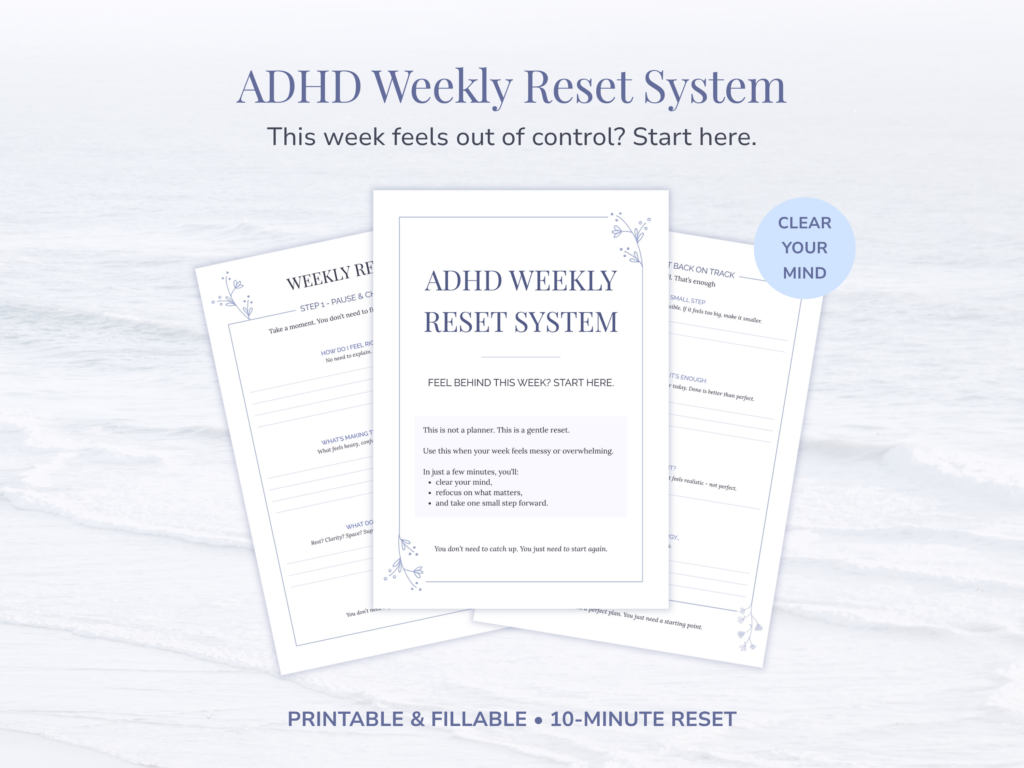
The ADHD Weekly Reset was designed for moments when the week feels heavy, chaotic, or mentally overloaded. It’s not a strict planner or a productivity review. It’s a gentle weekly page that helps you unload your thoughts, choose up to three priorities, check in with your energy, and define one small next step.
It also helps you consciously set aside what can wait, so you’re not trying to carry everything at once. There’s no pressure to plan a perfect week. Even using it imperfectly still counts.
And if you’re not sure what kind of overwhelm is making it hardest to move forward, you can also take the free overwhelm quiz to better understand what your brain might need right now.
Final reminder
ADHD minds don’t move forward by holding more. They often move forward by holding less, more intentionally.
Choosing fewer priorities isn’t a weakness. It’s a strategy that respects how your brain works. And sometimes, it’s exactly what allows progress to finally happen.